







Finding ways to save money on rent can have a much bigger impact on your monthly budget than cutting a few small everyday purchases.
Rent is often one of a household’s largest regular expenses. However, the cheapest advertised property is not always the cheapest place to live.
Transport, energy, Council Tax or local rates, broadband, parking and other household costs can quickly reduce the saving from choosing a lower-priced rental.
The best approach is therefore to look at your total cost of living, not rent in isolation.
This guide covers practical ways to:
reduce housing costs;
lower household bills;
make shared accommodation more affordable;
control energy use;
reduce transport expenses; and
compare properties based on their real monthly cost.
How to Save Money on Rent
Housing costs are usually the best place to start because even a relatively small monthly difference can become significant over an entire year.
Saving £75 per month on rent, for example, adds up to:
£75 × 12 = £900 per year
However, make sure that reducing your rent does not create larger costs elsewhere.
1. Compare Similar Rental Properties
Do not judge the local rental market from one property listing.
Compare several homes with similar:
bedroom numbers;
property types;
locations;
furniture;
condition;
transport access; and
included bills.
For example, a property advertised at £950 per month may initially appear better value than one costing £1,000.
But the comparison changes if the cheaper property:
is much farther from work;
requires an expensive commute;
has higher energy costs;
excludes bills that are included elsewhere; or
needs a car when the other property does not.
Look at what you actually receive for your monthly spending.
2. Search a Wider Area
Expanding your property search by a few miles can sometimes reveal significantly different rental prices.
This is particularly common in major cities where neighbouring areas can have very different housing markets.
Instead of searching only one postcode, compare:
neighbouring districts;
suburbs;
nearby towns;
areas on alternative transport routes; and
locations slightly farther from the city centre.
If you are flexible about where you live, comparing different cities can produce even larger differences.
Our 15 Affordable UK Cities With Lower Rent Than London guide compares current rental costs across a range of UK cities and can help you see how much location can affect housing costs.
However, lower rent should always be considered alongside employment, transport and your everyday lifestyle.
3. Decide How Much Space You Actually Need
Larger properties usually cost more to rent.
They may also cost more to:
heat;
furnish;
light; and
maintain.
Before paying for an additional bedroom, large garden or separate dining room, ask whether you will genuinely use the extra space.
A smaller property may provide everything you need at a lower monthly cost.
This does not mean choosing a home that is overcrowded or unsuitable.
The aim is simply to avoid paying substantially more for space that provides little practical value to you.
4. Compare Total Housing Costs
Rent is only one part of your monthly housing budget.
Create an estimate that includes:
rent;
Council Tax or local rates;
gas;
electricity;
water;
broadband;
insurance;
parking;
transport; and
other unavoidable costs.
For example:
Property A
Rent: £1,000
Council Tax: £150
Energy and water: £130
Broadband: £30
Transport: £80
Total: £1,390
Property B
Rent: £900
Council Tax: £145
Energy and water: £150
Broadband: £30
Transport: £220
Total: £1,445
Property B has £100 cheaper rent but costs approximately £55 more per month overall.
This is why rent should never be compared without considering the rest of your regular expenses.
5. Consider Shared Accommodation
Sharing a flat or house can significantly reduce individual housing costs.
Instead of paying for an entire property yourself, you may be able to share:
rent;
broadband;
electricity;
gas;
water; and
household essentials.
For example, a two-bedroom property costing £1,400 per month would cost £700 each if two tenants split the rent equally.
A one-bedroom flat in the same area might cost one person £1,050.
Sharing could therefore reduce that person’s rent by approximately £350 each month before considering shared bills.
However, affordability should not be your only consideration.
Make sure the household arrangement suits your lifestyle.
Before sharing, discuss:
how rent will be divided;
bills;
food;
cleaning;
guests;
working from home;
shared purchases; and
what happens if somebody wants to leave.
Clear expectations can prevent disagreements later.
6. Check Whether Bills Are Included
A property advertised with bills included can make budgeting easier.
However, it is not automatically cheaper.
Find out exactly what the rent includes.
Possible included costs might be:
electricity;
gas;
water;
broadband; and
Council Tax where applicable.
Then compare the inclusive rent with what you would reasonably expect to pay if the bills were separate.
For example:
Property A: £850 including bills
Property B: £740 rent + approximately £130 bills
Property B would cost approximately £870 in total, making the apparently more expensive Property A slightly cheaper overall.
Also check whether bills-inclusive agreements have fair-use limits.
7. Check Council Tax Before Moving
For renters in England, Scotland and Wales, Council Tax can represent a significant monthly expense.
The amount depends partly on:
the property’s Council Tax band;
the local authority; and
your household circumstances.
When comparing properties, check the actual Council Tax rather than assuming nearby homes will cost the same.
You should also check whether you qualify for a discount or exemption.
For example, someone living alone may normally be eligible for a 25% single-person discount.
Qualifying full-time student households may also be exempt.
Northern Ireland uses domestic rates rather than Council Tax, so different rules apply.
8. Reduce Unnecessary Energy Use
Electricity and heating can add substantially to the cost of renting.
You do not need to make major changes to the property to reduce unnecessary consumption.
Simple habits can include:
switching lights off in empty rooms;
avoiding leaving devices unnecessarily on standby;
using washing machines with full loads where practical;
using suitable lower-temperature wash settings;
avoiding unnecessary tumble-dryer use;
understanding your heating controls;
reducing unnecessary hot-water use; and
monitoring how much energy you consume.
Small savings can become meaningful when repeated throughout the year.
For more detailed guidance, read our Sustainable Renting: A Guide to Greener Rental Homes, which covers heating, electricity, water use, appliances, waste and renter-friendly energy-saving ideas.
9. Understand Your Heating Controls
Heating can be one of the biggest household energy expenses.
Learn how the heating system in your rental actually works.
Check whether you have:
a programmer;
thermostat;
thermostatic radiator valves;
smart controls; or
another type of heating control.
Avoid heating an empty property unnecessarily.
At the same time, do not reduce heating to a level that makes the home unhealthy or causes problems such as excessive condensation.
The aim is sensible energy use, not living in uncomfortable conditions simply to save money.
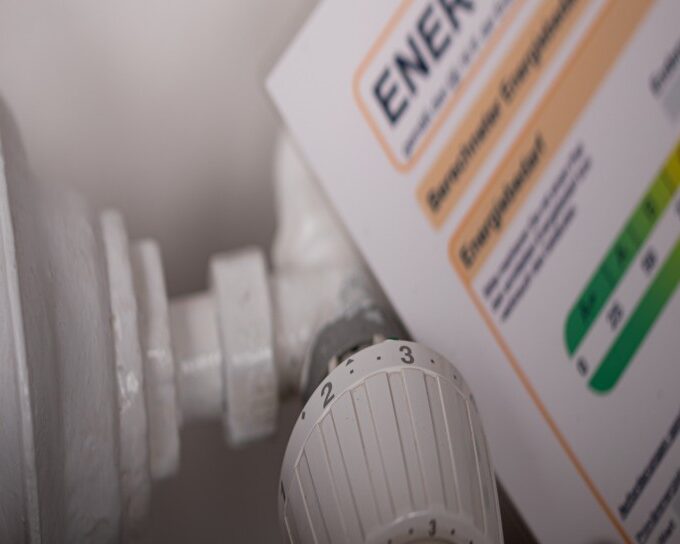
10. Check Energy Efficiency Before Choosing a Home
If you are searching for another rental, consider energy efficiency before signing.
Look at:
the property’s EPC;
heating system;
glazing;
visible draughts;
heating controls;
insulation information where available; and
appliances supplied with the property.
A home with slightly cheaper rent may not provide better value if it is considerably more expensive to heat.
The Energy Performance Certificate can provide useful information when comparing homes, although actual energy costs will depend on how the household uses the property.
11. Report Faulty Heating and Repairs
Saving energy should not mean tolerating a defective rental property.
If there is a problem with:
heating;
hot water;
windows;
plumbing;
electrical systems; or
another part of the property requiring repair,
report it to your landlord or managing agent.
Do not rely indefinitely on expensive temporary solutions to compensate for a repair that needs to be addressed.
For example, repeatedly using portable electric heaters because a fixed heating system is broken could substantially increase your energy costs.
Report the underlying problem.
12. Review Broadband Costs
Broadband contracts can become more expensive after introductory offers end.
Before renewing, compare:
monthly cost;
download speed;
upload speed;
contract length;
setup costs; and
the amount of speed your household genuinely needs.
The most expensive package is not automatically the best option.
A household mainly using broadband for:
browsing;
streaming;
ordinary video calls; and
everyday internet use
may not necessarily need the fastest premium package available.
However, households with several remote workers, gamers or heavy internet users may need greater capacity.
Choose based on your actual usage rather than the package name.
13. Review Mobile Contracts
Apply the same principle to your mobile phone.
Check:
how much data you actually use;
whether you still need your current allowance;
whether the handset has already been paid off;
whether your contract has ended; and
what alternatives are available.
Small monthly savings across broadband and mobile contracts can become worthwhile over a full year.
For example:
Saving £12 per month = £144 per year
14. Be Careful With Rent Paid Upfront
Older rental advice sometimes suggested offering six or twelve months’ rent upfront in exchange for a discount.
For renters in England, this should not be treated as a standard money-saving strategy.
For applicable assured periodic tenancies from 1 May 2026, landlords and letting agents cannot ask for, encourage or accept rent before the tenancy agreement has been signed.
After the tenancy agreement has been signed but before the tenancy begins, a landlord can normally request:
up to one month’s rent where rent is paid monthly; or
up to 28 days’ rent where rent is paid more frequently.
Limited exceptions apply in certain circumstances, including some council-arranged, social and supported housing.
Once your tenancy has started, you can choose to pay rent early if that helps you budget. However, a landlord generally cannot require you to pay rent before the agreed due date.
Therefore, offering a very large upfront payment should not be relied upon as a routine way to obtain cheaper rent.
These rules relate to applicable tenancies in England. Different rental systems operate in Wales, Scotland and Northern Ireland.
15. Compare Transport Costs With Rent
Moving farther away from a city centre may reduce rent.
But it can also increase your travel costs.
Suppose:
Central Property
Rent: £1,200
Transport: £80
Combined: £1,280
Outer-Area Property
Rent: £1,000
Transport: £260
Combined: £1,260
The second property still saves money, but only £20 per month, not the £200 suggested by the rent difference alone.
Also consider the amount of time spent travelling.
A slightly higher housing cost may sometimes be worth paying if it saves several hours of commuting every week.
16. Consider Whether You Need a Car
Transport costs can change dramatically depending on where you live.
Owning a car may involve:
insurance;
fuel or charging;
vehicle tax where applicable;
servicing;
repairs;
parking;
MOT costs; and
finance payments where relevant.
A rental home with slightly higher rent but excellent public transport could potentially reduce your overall expenses if it allows you to use a car less frequently or live without one.
Do not compare rent without considering how the location affects your transport choices.
17. Walk or Cycle Where Practical
If your home is within a realistic distance of:
work;
university;
shops;
public transport; or
everyday services,
walking or cycling may reduce travel costs.
This will not be practical for every journey or household.
Weather, distance, road conditions, disability, personal circumstances and safe routes all matter.
However, when comparing neighbourhoods, consider whether everyday destinations can be reached without paying for transport every time.
18. Reduce Food Waste
Food is another major household expense.
One way to reduce unnecessary spending is to waste less of what you buy.
Useful habits include:
checking cupboards before shopping;
making a simple meal plan;
freezing food before it spoils;
storing food correctly;
using leftovers safely;
shopping with a list; and
avoiding buying large amounts simply because something is discounted.
A discounted product does not save money if it eventually goes in the bin.
19. Share Household Purchases Sensibly
In shared accommodation, some items may be cheaper when bought collectively.
Examples can include:
cleaning products;
toilet roll;
bin bags;
washing-up liquid; and
other communal essentials.
Agree in advance which products are shared and how costs will be divided.
Avoid assuming that every housemate wants to share every expense.
Clear arrangements are usually easier than repeatedly trying to calculate who owes what.
20. Buy Used Furniture Where Appropriate
Setting up a rental home can become expensive.
Before buying everything new, consider whether some items could be:
brought from your previous home;
purchased second-hand;
obtained from family;
reused; or
bought gradually rather than immediately.
Furniture such as:
tables;
chairs;
shelving;
mirrors; and
storage
can often be found second-hand.
Check condition and suitability carefully before buying.
21. Do Not Over-Furnish a Rental
It can be tempting to buy everything immediately after moving.
Instead, live in the property for a short period and see what you actually need.
This can prevent spending money on:
furniture that does not fit;
storage you do not need;
decorative items you later replace; or
appliances already available elsewhere in the property.
Prioritise essential items first.
22. Check What the Landlord Already Provides
Before buying household items, check the inventory and ask what comes with the property.
A furnished or partly furnished rental may already include:
beds;
wardrobes;
tables;
chairs;
washing machine;
fridge;
freezer; or
other appliances.
Avoid buying something before confirming whether it is already supplied.
23. Compare Insurance Rather Than Automatically Renewing
If you have contents insurance, check the price before automatically renewing.
Compare:
cover level;
excess;
exclusions;
optional extras; and
monthly or annual cost.
Make sure the policy suits renters and covers the possessions you actually need to protect.
The cheapest policy is not automatically the best if important cover is missing.
24. Be Careful With False Economies
Saving money does not always mean choosing the lowest price.
Some decisions can cost more later.
Examples might include:
choosing an unsuitable property purely because the rent is low;
living very far from work without calculating travel costs;
ignoring repairs;
buying poor-quality items that quickly need replacing;
using inefficient temporary heating instead of reporting a fault; or
choosing inadequate insurance simply because the premium is cheaper.
Focus on value, not only price.
25. Compare Two Properties Properly
When deciding between properties, create a simple comparison.
| Cost | Property A | Property B |
|---|---|---|
| Rent | £ | £ |
| Council Tax/rates | £ | £ |
| Energy and water | £ | £ |
| Broadband | £ | £ |
| Transport | £ | £ |
| Parking | £ | £ |
| Insurance | £ | £ |
| Other regular costs | £ | £ |
| Total monthly cost | £ | £ |
Then compare non-financial factors.
| Factor | Property A | Property B |
|---|---|---|
| Commute | ||
| Property size | ||
| Transport links | ||
| Shops | ||
| Green space | ||
| Broadband | ||
| Energy efficiency | ||
| Overall preference |
This provides a much clearer picture than comparing advertised rents alone.
26. When Moving City Could Save Money
If you genuinely have flexibility over location, regional rental differences can be substantial.
However, do not assume every city outside London is automatically cheap.
Compare:
current rents;
available jobs;
expected salary;
transport;
local services;
Council Tax or rates;
moving costs; and
your preferred lifestyle.
Our 15 Affordable UK Cities With Lower Rent Than London guide compares rental costs across different UK locations using current data.
A cheaper city is useful only if the overall move works for your finances and lifestyle.
27. Build a Small Emergency Buffer
Reducing living costs becomes much more useful if some of the money saved is kept for unexpected expenses.
Even a modest emergency buffer can help with costs such as:
replacing personal belongings;
unexpected travel;
moving expenses;
temporary income disruption; or
other unavoidable bills.
You do not need to build a large fund immediately.
Regularly setting aside a manageable amount can gradually provide more financial flexibility.
28. Review Your Budget Regularly
Your household costs can change.
Rent may increase.
Energy tariffs can change.
A broadband deal may expire.
Your commute may change.
Review your main expenses periodically rather than assuming they will remain the same forever.
A simple monthly review might include:
rent;
energy;
water;
Council Tax or rates;
broadband;
mobile;
transport;
insurance;
food; and
subscriptions.
Look first at the largest costs.
Reducing a £1,200 housing expense by even a few percent can have more impact than spending large amounts of time trying to save pennies elsewhere.
Save Money Without Making Your Home Miserable
A rental home should still be somewhere you can live comfortably.
Trying to save money does not mean you should:
live in an unsuitable property;
avoid necessary heating;
tolerate serious repairs;
choose an unsafe location;
share with more people than is appropriate; or
sacrifice every activity you enjoy.
The aim is to remove unnecessary costs while protecting the things that genuinely matter to you.
For one renter, living close to work may be worth paying slightly higher rent.
For another, sharing accommodation may free up hundreds of pounds every month.
Someone working remotely may be able to move farther from an expensive city centre without increasing transport costs.
The best solution depends on your circumstances.
Quick Money-Saving Checklist for Renters
Before Choosing a Property
☐ Compare several similar rentals
☐ Search neighbouring areas
☐ Calculate the total monthly cost
☐ Check Council Tax or rates
☐ Check likely energy costs
☐ Compare transport expenses
☐ Check the property’s EPC
☐ Decide how much space you genuinely need
After Moving In
☐ Learn how the heating controls work
☐ Monitor energy consumption
☐ Review broadband costs
☐ Review mobile contracts
☐ Reduce food waste
☐ Share appropriate household costs
☐ Report repairs promptly
☐ Avoid unnecessary household purchases
When Reviewing Your Budget
☐ Check your largest expenses first
☐ Compare renewal prices
☐ Cancel services you no longer use
☐ Recalculate commuting costs
☐ Review insurance
☐ Set aside some savings where possible
Final Thoughts
The best way to save money on rent is not necessarily to find the cheapest advertised property.
Look at the complete picture.
A good rental decision considers:
rent;
bills;
transport;
property size;
energy efficiency;
location;
Council Tax or rates; and
your everyday lifestyle.
Sharing accommodation, choosing a smaller property or moving to a less expensive neighbourhood can create substantial savings.
Smaller changes can also help.
Reducing unnecessary energy use, reviewing broadband and mobile contracts, avoiding food waste and making sensible household purchases can gradually lower your monthly spending.
For renters in England, remember that offering large upfront rent payments should not be treated as a standard money-saving strategy. The rules governing rent in advance changed significantly for applicable tenancies from 1 May 2026.
The most useful question to ask is not simply:
“Which property has the lowest rent?”
Instead ask:
“Which option gives me the best overall home at a monthly cost I can comfortably afford?”
That approach can help you reduce your spending without choosing a property or lifestyle that does not work for you.
This article provides general information and does not constitute financial or legal advice. Housing and rental rules differ across England, Wales, Scotland and Northern Ireland. Check current guidance applying to your circumstances.










Leave a comment