



Adding greenery is one of the easiest ways to make a rented home feel brighter, calmer and more welcoming. Affordable houseplants can bring colour and character to a room without permanent decorating, while some plants may also have small effects on humidity and indoor pollutants.
However, houseplants should not be treated as a replacement for fresh air. Research suggests their biggest everyday benefits are likely to come from improving wellbeing and making indoor spaces more enjoyable, while good ventilation remains much more important for maintaining healthy indoor air.
Can Affordable Houseplants Really Improve Indoor Air Quality?
Houseplants are often promoted as natural air purifiers. There is some science behind this idea, but the reality is more complicated.
Plants can absorb carbon dioxide and some airborne compounds under the right conditions. Research has also explored their ability to influence humidity and reduce certain indoor pollutants.
However, studies suggest that a normal number of plants in an ordinary home is unlikely to produce a dramatic improvement in overall air quality. Significant effects may require far more plants, stronger light and controlled conditions than most homes provide.
Therefore, think of affordable houseplants as one part of creating a pleasant indoor environment rather than as a substitute for opening windows, using extractor fans or dealing with sources of pollution.
For renters, that is actually good news. You can enjoy plants for their appearance, calming effect and renter-friendly decorating potential without needing to turn your flat into a greenhouse.
1. Spider Plant
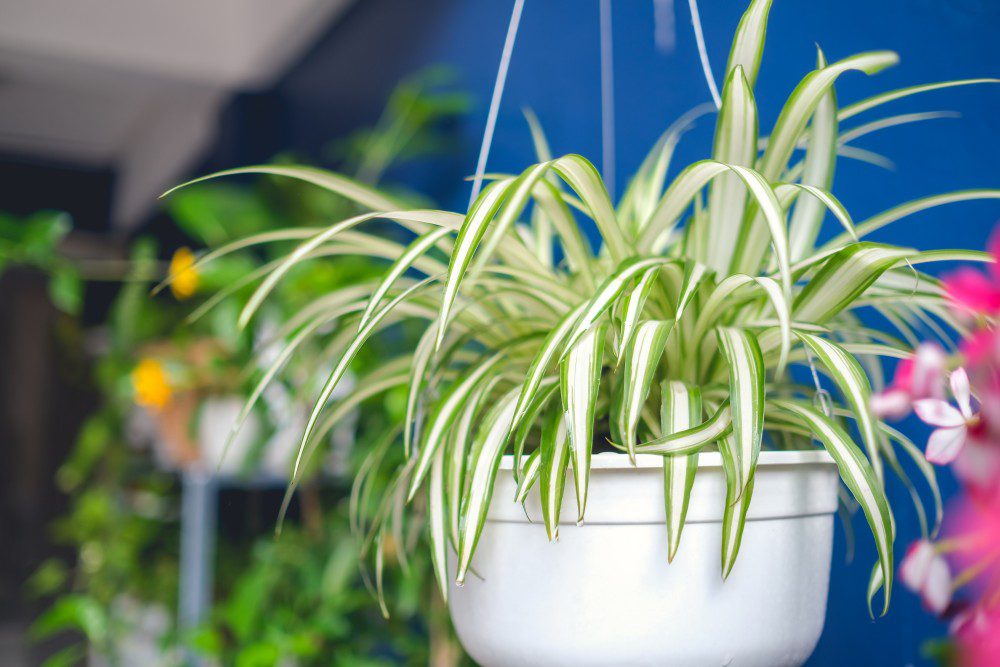
The spider plant is a classic choice for renters because it is inexpensive, adaptable and relatively easy to care for.
Its long green-and-white leaves work particularly well on shelves, desks and hanging planters. Mature plants also produce smaller plantlets that can eventually be separated and grown in their own pots.
Spider plants generally prefer bright, indirect light but can cope with a range of indoor conditions.
Best for: Bedrooms, home offices and living rooms.
Renter tip: Use a hanging planter on a freestanding plant stand rather than drilling hooks into walls or ceilings.
2. Snake Plant
Snake plants are popular because they can tolerate periods of neglect better than many more demanding houseplants.
Their tall, upright leaves also make them useful for smaller rented homes because they provide plenty of visual impact without taking up much floor space.
Place one beside a sofa, desk, bookcase or unused corner to introduce greenery without cluttering the room.
Best for: Small flats, bedrooms and low-maintenance homes.
If you have pets, check whether a plant is suitable for them before bringing it into your home.
3. Peace Lily
Peace lilies are known for their glossy green foliage and distinctive white flowers.
They can add an elegant look to bedrooms and living areas and generally prefer bright, indirect light rather than intense direct sunshine.
Peace lilies also like consistent moisture, although overwatering should still be avoided.
Best for: Living rooms and bright bedrooms.
Again, households with pets should check plant-safety information before choosing this species.
4. Rubber Plant
A rubber plant can be a good option if you want something larger and more architectural.
Its broad, glossy leaves can make an otherwise plain rental room feel much more finished. A healthy plant can eventually become a striking feature without requiring any permanent changes to the property.
Rubber plants usually appreciate bright, indirect light and should be allowed to dry slightly between waterings.
Best for: Living rooms, dining areas and larger bedrooms.
5. Boston Fern
Boston ferns provide soft, dense foliage and can work particularly well where you want a more natural or relaxed appearance.
They generally prefer more humidity than some of the other plants in this guide, so bathrooms with suitable natural light can sometimes be a good location.
However, ferns can require a little more attention to watering and humidity.
Best for: Bright bathrooms and humid rooms.
6. Dragon Tree
The dragon tree is another useful choice for renters who want a taller plant without sacrificing too much floor space.
Its narrow leaves and upright growth can work well beside furniture or in awkward corners where a wider plant would not fit.
Dragon trees are also included by the Royal Horticultural Society among easy-to-grow indoor foliage plants.
Best for: Living rooms, hallways and home offices.
7. Pothos
Pothos is particularly useful when you want greenery at different heights.
Its trailing vines can grow across shelves or down from cupboards and plant stands, making it a simple way to soften hard furniture and empty corners.
RHS research into people’s responses to houseplants found pothos among the plants rated particularly highly for attractiveness and wellbeing.
Best for: Shelves, desks and bookcases.
8. English Ivy
English ivy can also be grown indoors and works especially well as a trailing plant.
Instead of permanently attaching it to walls, keep it contained in a pot or place it on a tall shelf so the stems can fall naturally.
It prefers suitable light, good airflow and careful watering.
Best for: Shelving and bright rooms.
Choosing the Right Affordable Houseplants for Your Rental
Price should not be the only consideration when buying plants. Choosing varieties that suit your home can save money because healthy plants are much easier to maintain.
Before buying, consider:
-
Natural light: Check whether your room is bright, shaded or receives direct sunshine.
-
Available space: Tall upright plants are often better for small flats than wide-growing varieties.
-
Maintenance: If you travel frequently or forget to water plants, choose something forgiving.
-
Pets: Some common houseplants can be harmful if eaten by cats, dogs or other animals.
-
Humidity: Bathrooms may suit plants that prefer moisture, while other varieties prefer drier rooms.
-
Cost: Smaller plants are usually cheaper and can grow into impressive specimens over time.
How to Use Houseplants in a Rental Without Making Permanent Changes
One of the advantages of indoor plants is that they can transform a room without paint, wallpaper or permanent fixtures.
Try placing plants on existing shelves, windowsills, side tables and bookcases. Freestanding plant stands are another useful option because they can move with you when your tenancy ends.
You can also group two or three plants of different heights together rather than filling every available surface. This creates more visual impact while keeping maintenance manageable.
For more ideas, link this section to the RentWizz Rental Decorating Ideas and Renter-Friendly Upgrades guides.
Don’t Forget Ventilation
Although plants can contribute to a pleasant indoor environment, they should not be your main strategy for dealing with poor air quality.
Where appropriate, open windows regularly, use kitchen and bathroom extractor fans, avoid blocking ventilation openings and deal with sources of damp or excessive moisture promptly.
If a rental property has persistent damp, mould, faulty ventilation or another maintenance problem, adding more plants will not solve the underlying issue. Report property problems to the landlord or managing agent rather than relying on houseplants to compensate.
Houseplants Can Make a Rental Feel More Like Home
The strongest reason to introduce plants into a rented home may simply be how they make the space feel.
Research into indoor plants has linked greenery with benefits such as improved mood, reduced stress and more positive perceptions of indoor spaces. Healthy plants with lush green foliage are also often perceived as making an environment feel fresher and more pleasant.
For renters who cannot make major decorative changes, this makes plants particularly useful.
A few carefully chosen affordable houseplants can soften an empty room, introduce colour, create a connection with nature and make temporary accommodation feel much more personal.
Final Thoughts
You do not need expensive plants or a large indoor garden to improve the feel of your rental home.
Start with one or two affordable houseplants that suit the light, space and amount of care you can realistically provide. Spider plants, snake plants, pothos, dragon trees and rubber plants can all provide attractive greenery without requiring major changes to your home.
Just remember that plants work best alongside — not instead of — good ventilation and proper property maintenance.
With the right choices, a small amount of greenery can be an affordable, flexible and renter-friendly way to make your home feel fresher, calmer and more welcoming.